
Blog
By Amanda Oldfield
Understanding Year-Round Access for Cabin Buyers
Real Estate, Cabin Buying, Year-Round Access
What Does “Year-Round Access” Really Mean When Buying a Cabin?
“Year-round access” sounds simple, but when you are buying a cabin, it can mean very different things in practice. Understanding what is promised versus what is actually usable in January’s deepest snow or April’s mud season is essential before you sign on the dotted line.
The Listing Phrase That Can Mislead Buyers
When a listing says a cabin has “year-round access”, many buyers picture a plowed, paved road that is always easy to reach by car. In reality, the phrase is often used loosely. It might only mean the road technically exists in all seasons, not that it is maintained, plowed, or safe to drive during heavy snow, ice, or spring thaw.
Some sellers use the term because the property is not officially “seasonal” in zoning records. Others assume that because someone could get there in winter by truck, ATV, or snowmobile it counts as year-round. As a buyer, you need a more precise definition before you rely on that phrase for your lifestyle or retirement plans.
Road Type: Public, Private, or Seasonal?
Start by asking what kind of road leads to the cabin. This has a major impact on what “year-round” really looks like:
Public, maintained road: Typically plowed and sanded by the municipality, with reliable access for standard vehicles in most weather. This is the closest to true, convenient year-round access.
Private road or shared driveway: Maintenance depends on agreements between owners. If no formal road association exists, you may be personally responsible for plowing, grading, and repairs or dealing with neighbors who do not want to share the cost.
Seasonal or unmaintained road: These routes may be passable in summer but effectively closed by snow, ice, or mud. A cabin on such a road might be “accessible” in theory, but not in a way that supports everyday living.
💡 Pro Tip: Call the local road or highway department and ask directly whether the road is publicly maintained in winter and how far plowing typically extends.
Winter Maintenance: Who Plows and Who Pays?
True year-round access depends on consistent winter maintenance. Even if a road is technically open, deep snow, drifting, and ice can make it unusable without plowing. Important questions to ask include:
Who is responsible for plowing the road and the driveway?
Is there a written road maintenance agreement with neighbors?
What do typical annual costs look like for plowing, sanding, and grading?
In many rural areas, a cabin can be reached only if you hire a private plow service or own equipment yourself. That might be fine for some buyers, but it is very different from simply turning the key in an all-wheel-drive SUV and driving up whenever you like.
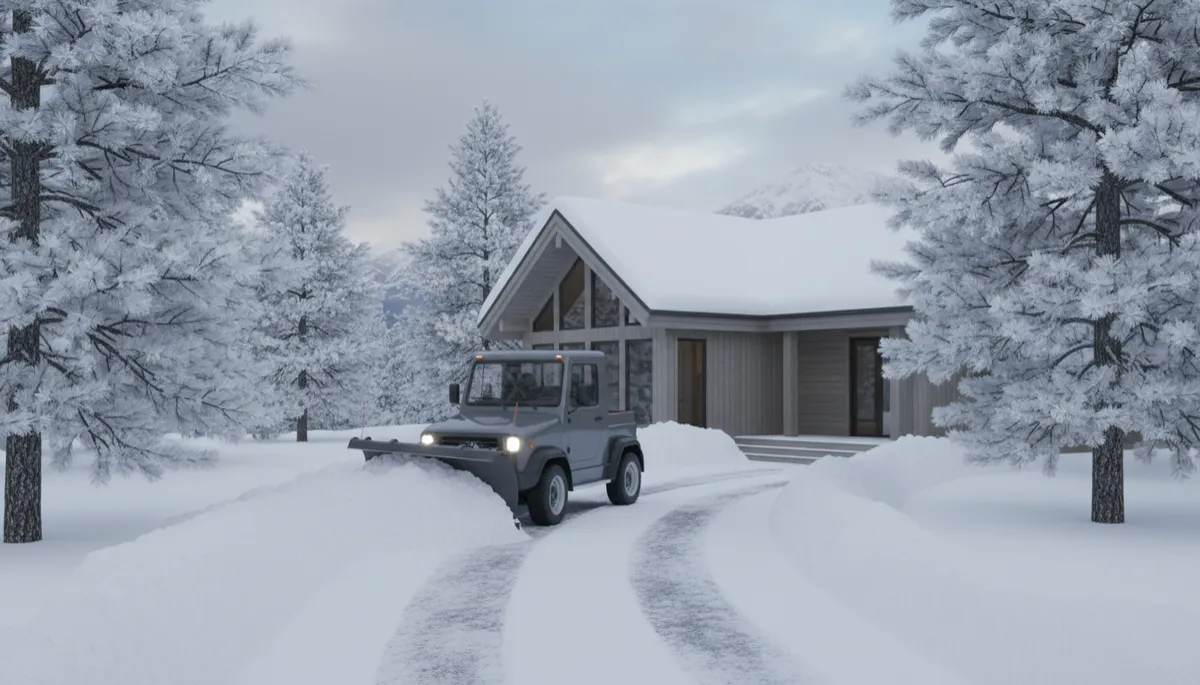
Reliable winter access often depends on clear agreements about plowing and shared costs.
Access Versus Comfort: Can You Actually Live There Year-Round?
Another layer to “year-round access” is whether the cabin itself is livable in all seasons. Some properties can be reached in winter, but were never designed for long-term cold-weather use. Before you assume a “four-season” lifestyle, look closely at:
Insulation and windows: Is the cabin insulated like a normal home, or more like a summer cottage? Old single-pane windows and thin walls can make winter stays uncomfortable and expensive to heat.
Heating system: Is there a reliable primary heat source such as a furnace, boiler, or modern wood stove—or only a decorative fireplace and a few space heaters?
Water and septic: Are the pipes and septic system protected from freezing? Is the well usable in winter, or does the property rely on a seasonal water line or lake intake?
📌 Key Takeaway: A road you can reach in January does not automatically mean a cabin you can comfortably live in during January.
How to Verify “Year-Round Access” Before You Buy
To protect yourself, go beyond the listing language and do a little detective work:
Visit the property in a challenging season if possible late fall, winter, or mud season to see actual conditions, not just sunny summer photos.
Ask neighbors how they access their places in winter, how often roads drift in, and what they pay for maintenance each year.
Request copies of any road maintenance agreements and confirm details with your real estate agent and attorney.
When you understand what “year-round access” really means for a specific cabin—roads, maintenance, utilities, and comfort you can decide whether it fits your plans for weekend getaways, seasonal escapes, or full-time living, without any unpleasant surprises once the snow starts to fall.



Follow us