
Blog
By Amanda Oldfield

Waterfront Property in Cariboo: Permits & Docks
Real Estate, Waterfront Property, Cariboo BC
Waterfront Property in the Cariboo: Permits, Docks and Environmental Considerations
Buying or owning waterfront property in BC’s Cariboo is a dream for many but it comes with a unique set of rules. From provincial dock permits to local Cariboo Regional District (CRD) bylaws and environmental protections, understanding the framework before you build a dock, stairs, or a lakeside deck is essential.
Waterfront Regulations in BC: The Big Picture
Across British Columbia, almost all foreshore the land below the natural boundary of a lake or river is provincial Crown land, even when the upland parcel is privately owned. That means most docks, boat lifts and ramps rest on Crown land and must follow rules set by the Province, administered through FrontCounter BC and the Ministry of Water, Land and Resource Stewardship.
In addition, the Riparian Areas Protection Regulation (RAPR) applies to many kinds of development near the water, from new homes and additions to access stairs and retaining walls. Federal agencies such as Fisheries and Oceans Canada and Transport Canada may also be involved where fish habitat or navigation are affected.
📌 Key Takeaway: Owning the lot does not mean you automatically control the foreshore. Provincial, local and sometimes federal rules all apply.
Dock Permits in BC: General Permission for Private Moorage
For most private residential docks on lakes and rivers, BC uses a “General Permission” system under the Land Act. If your dock meets all of the conditions in the Province’s General Permission to Use Crown Land for a Private Moorage Dock, you are automatically authorized no formal application or provincial fee is required. The detailed conditions are set out on the provincial private moorage page at www2.gov.bc.ca.
Typically, only one dock per property is allowed under General Permission.
The dock must not obstruct public access along the foreshore or navigation on the water.
No fill, dredging or solid-core structures are permitted below the natural boundary.
Proof of liability coverage (often via your homeowner’s insurance) is required.
💡 Pro Tip: Before you design a dock, download the Province’s General Permission guidance and checklist from the private moorage page and confirm that your concept can meet every condition.
Dock Permits in BC: When You Need Specific Permission
If your proposed dock does not qualify for General Permission because of size, design, shared or group moorage, a boat ramp, or location in an “application‑only” area you must apply for a Specific Permission or, in some cases, a Lease under the Land Act. Applications are submitted through Virtual FrontCounter BC using a BCeID account.
Specific Permission involves a one‑time application fee (currently $250) and is typically used for docks that slightly exceed General Permission criteria or for certain structures like stand‑alone lifts or ramps.
A Lease is considered where there is a substantial investment or a need for precisely surveyed boundaries; terms are often 20 years with annual rental (for example, around $200 per year for smaller tenures).
Regardless of whether you rely on General Permission, Specific Permission or a Lease, a separate Section 11 Approval under the Water Sustainability Act is normally required for instream works such as dock construction. FrontCounter BC provides guidance on these approvals alongside moorage authorizations at this provincial information page.
Dock Design and Environmental Considerations in BC
Environmental protection is central to BC’s waterfront rules. Provincial best‑management practices—such as the Dock Design Criteria for Okanagan Large Lakes provide a useful model for low‑impact construction, even outside the Okanagan. These criteria, available as a PDF from the Province at www2.gov.bc.ca, emphasize:
Avoiding fish spawning areas and sensitive aquatic vegetation.
Limiting walkway widths (often to 1.5 m) and platform size (for example, up to 24 m²).
Using non‑treated materials below the waterline and avoiding foam‑filled tires for flotation.
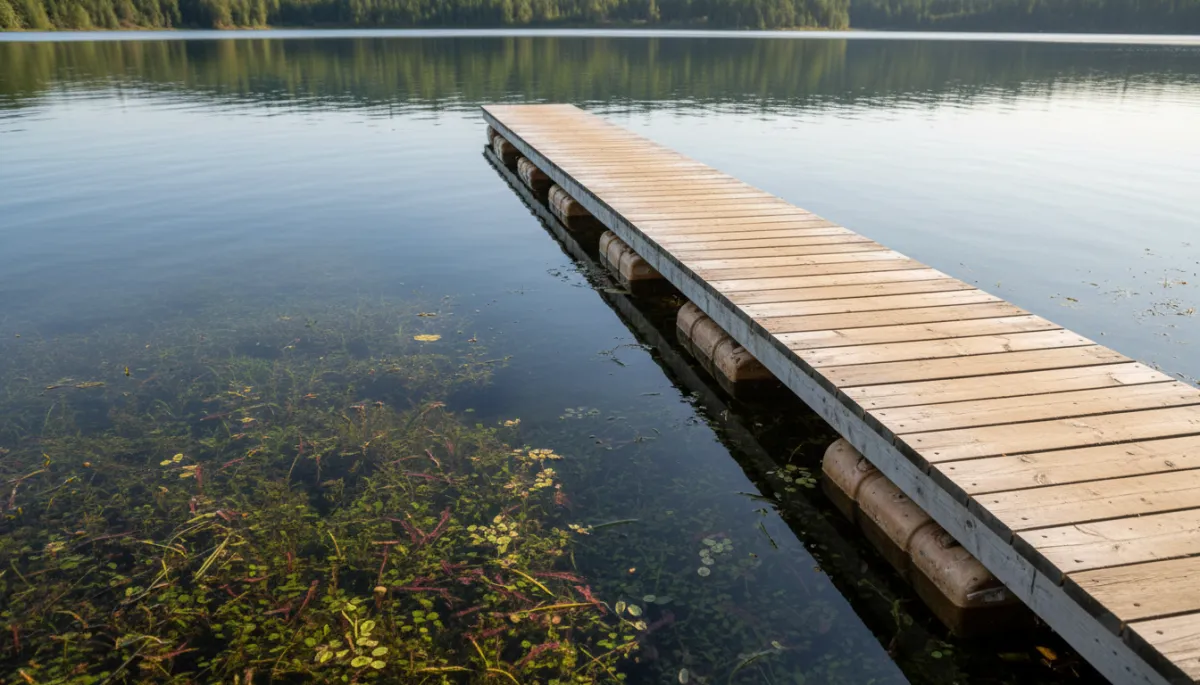
Thoughtful dock design helps protect fish habitat while preserving lake access.
Waterfront Regulations in the Cariboo: Local CRD Rules
In the Cariboo, provincial rules are layered with local regulations administered by the Cariboo Regional District (CRD). Official Community Plans (OCPs) and zoning bylaws often designate Development Permit Areas along lakes and rivers for riparian protection, hazard management and form‑and‑character controls.
The South Cariboo Area OCP, for example, stresses maintaining public access to the waterfront and ensuring development does not create safety hazards or conflict with neighbouring uses. You can review these policies in the OCP documents available on the CRD website at cariboord.ca.
Many waterfront projects—new homes, additions, retaining walls, access stairs and sometimes docks—may require a Development Permit supported by a report from a Qualified Environmental Professional or geotechnical engineer.
In some cases, the CRD may require a Section 219 covenant on title (for example, to address shoreland management or sewage disposal), as noted in CRD board reports and meeting minutes at pub-crd.escribemeetings.com.
📌 Key Takeaway: In the Cariboo, a dock or lakeside deck may trigger both a provincial authorization and a local Development Permit. Always check with CRD planning staff before you build.
Waterfront Regulations in Cariboo: Docks, Access and Shoreline Works
For Cariboo lakefront owners, three main layers typically apply when planning a dock or shoreline improvement:
Provincial Crown land authorization (General Permission, Specific Permission or Lease) and a Water Sustainability Act Section 11 approval, coordinated through FrontCounter BC.
Riparian protection requirements under RAPR, including setbacks and, where applicable, an assessment by a Qualified Environmental Professional.
Local CRD permits and covenants, such as Development Permits in designated areas, zoning amendments where land use is changing, and potential shoreland management covenants.
The CRD has also issued clarifications for specific lakes such as a 2026 FAQ for Deka Lake reminding owners to rely on official bylaws and CRD staff guidance rather than informal fact sheets. That FAQ is available via the CRD news section at cariboord.ca.
Practical Steps Before You Build in the Cariboo
Confirm your exact location and zoning. Check which CRD OCP and zoning bylaw apply to your property and whether you are in a Development Permit Area by visiting the planning section at cariboord.ca.
Contact FrontCounter BC early. Ask whether your proposed dock can proceed under General Permission or requires a Specific Permission or Lease. Contact options and guidance are listed on the provincial private moorage page at www2.gov.bc.ca.
Engage appropriate professionals. A Qualified Environmental Professional or geotechnical engineer may be needed to satisfy RAPR, Development Permit conditions or Section 11 requirements, particularly on steep or sensitive shorelines.
Plan for timelines and costs. While General Permission can be relatively quick, Specific Permissions, Leases and Development Permits involve application fees, technical reports and review times important considerations if you are buying a property with the intention of adding a dock soon.
Final Thoughts for Cariboo Waterfront Buyers and Owners
Waterfront property in the Cariboo offers outstanding recreation and lifestyle benefits, but the regulatory landscape is more complex than for non‑waterfront lots. By understanding BC‑wide waterfront regulations, the dock permit pathways through FrontCounter BC, and the CRD’s local shoreline rules, you can plan improvements that are both compliant and environmentally responsible.
Before you finalize a purchase or start building, verify the latest requirements directly with FrontCounter BC / Ministry of Water, Land and Resource Stewardship and the Cariboo Regional District. A little homework up front can ensure your dream dock and lakeside retreat are built to last and built right.
Amanda Oldfield Realtor - eXp Realty
96 Hwy 97, 100 Mile House, BC
250-318-5202