Blog
By Amanda Oldfield
Off-Grid Cabin Buying Guide: Interlakes BC
Off-Grid Living, Interlakes BC, Cabin Buying Guide
Buying an Off-Grid Cabin in the Interlakes, BC: A Realistic Fall/Winter Guide
Dreaming of a snowy cabin, crackling woodstove, and no neighbours in sight? The Interlakes region of BC is a magnet for recreational buyers and off-grid dreamers. But before you fall in love with a rustic listing, it pays to understand what “off-grid” really means for power, water, winter access, and your wallet.
What “Off-Grid” Really Means in the Interlakes
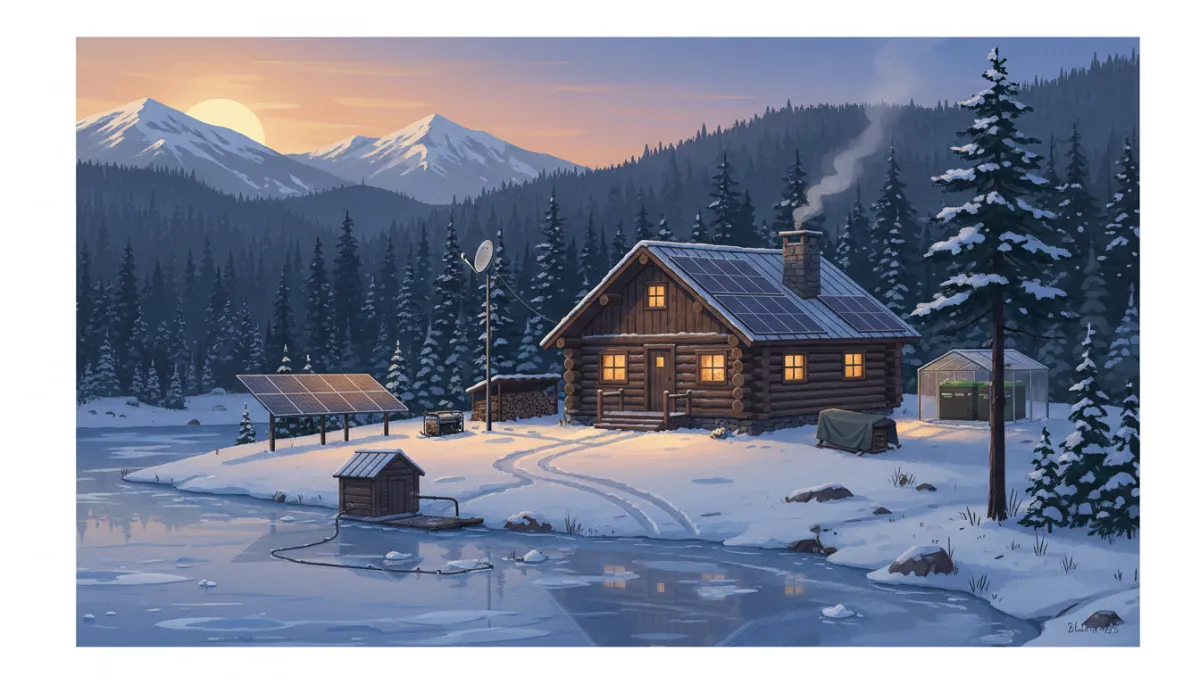
In the Interlakes corridor between 100 Mile House and Little Fort, “off-grid” usually means there is no connection to BC Hydro power and, often, limited conventional services. You’re responsible for your own electricity, water, and waste systems, and in winter you may also be your own road crew. Some cabins are completely off-grid; others are “semi off-grid” with a mix of solar, generator, and perhaps a drilled well or basic septic.
Current off-grid listings in the Interlakes show just how varied this can be. At one end, 6534 Horse Lake Forest Service Road offers a solid log cabin on 10 acres with solar power and several homestead-style outbuildings around the $360,000 mark (realtor.ca). At the other, 7585 N Bonaparte Road is a 160-acre property with a custom, solar-powered home and higher-end systems listed around $849,000. In between, you’ll find rustic lake cabins, small log getaways, and hobby farms with partial services. The systems in place – or not – should be a major part of how you evaluate any cabin listing.
Power: Solar, Batteries and Generators Working Together
In an off-grid Interlakes cabin, your power system is typically a three-part team: solar panels, batteries, and a backup generator. In summer, solar can comfortably run lights, a pressure pump, internet, and efficient appliances. In fall and winter, short days, low sun angles, and snow-covered panels mean your solar production drops dramatically just as your electricity use often increases.
Batteries store the energy your panels collect. Many Interlakes cabins still use lead-acid batteries, which are cheaper but heavier and more maintenance intensive. Newer builds, like the solar system at 7585 N Bonaparte Road, may use lithium batteries that charge faster and tolerate deeper discharges. Either way, batteries are consumables: budget for eventual replacement, especially if you plan to use the cabin heavily in winter.
A generator – usually propane or gasoline – is the safety net. In December and January, even well-designed systems often need generator top-ups to keep batteries healthy and run high-draw loads like power tools or a well pump. When you view off-grid listings, ask specific questions:
How old is the solar array and inverter, and who installed them?
What is the battery bank capacity, and when were the batteries last replaced?
Is there a wired-in generator with an automatic transfer switch, or just a portable unit?
💡 Pro Tip: A cheap cabin with a tired power system can quickly eat up your savings. Factor in realistic upgrade costs when comparing off-grid listings.
Water: Wells, Lake Intake, and Hauling in Winter
Water is often the biggest lifestyle divider between “off-grid romantic” and “off-grid reality.” In the Interlakes, your main options are wells, lake intake systems, or hauling water.
Drilled wells are the gold standard: turn on the tap, and water flows. Properties like 6665 Judson Road, with a dug well and natural spring on site, show how valuable a reliable source can be. However, not all wells are equal. You’ll want to confirm flow rate, water quality, and whether the system is set up to resist freezing in winter.
Lake intake systems draw water from Sheridan Lake, Bridge Lake, or one of the many smaller lakes in the area. They can work well for three-season cabins, but winter changes everything. Lines and pumps must be insulated and heat-traced, and you’ll need safe access to the lake once the shoreline is icy and snowed in.
Hauling water – either from a community fill station or a neighbour’s well – is the simplest on paper but the most labour-intensive. In deep winter, carrying jugs over icy paths or towing a sled from your truck to the cabin becomes part of your daily routine.
When you browse cabin listing pages, look closely at how the water system is described. “No running water” might be fine for occasional winter snowshoe trips, but it’s a very different experience from a fully plumbed cabin where you can shower after a day on the sleds.
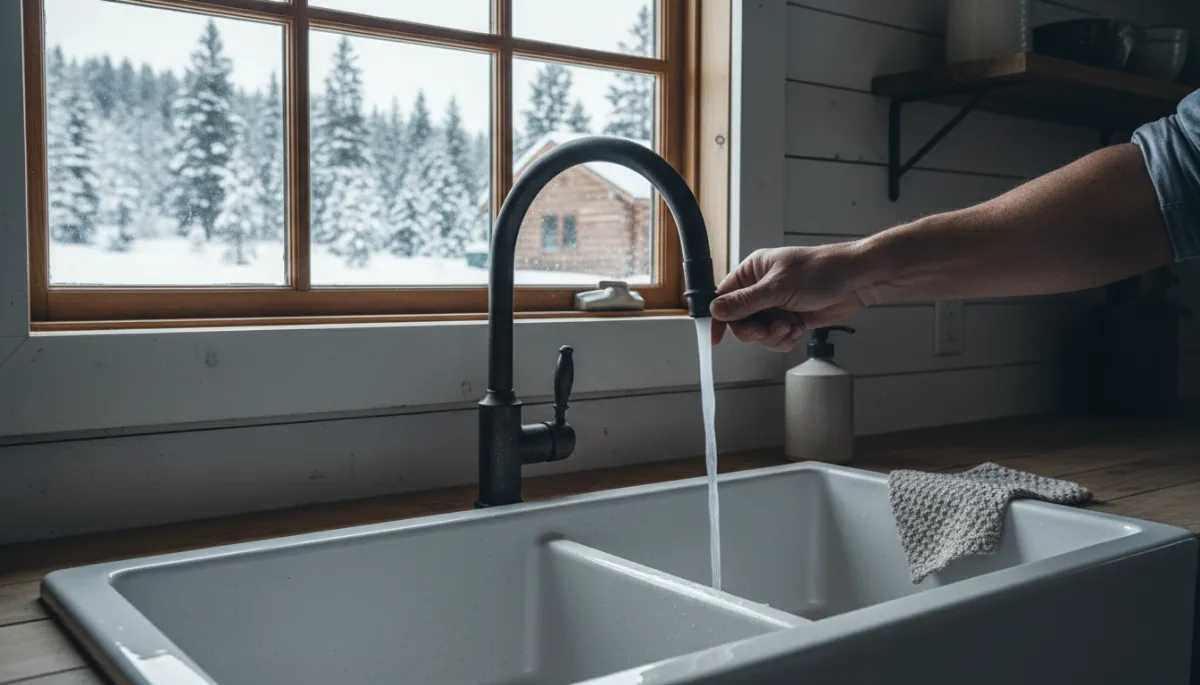
A reliable winter-ready water system often matters more than extra square footage.
Waste Solutions: Outhouse vs. Septic (and Everything in Between)
Waste is not glamorous, but it’s non-negotiable. Many classic Interlakes cabins, including some lakefront retreats, rely on outhouses. They’re simple, cheap, and legal when built to local standards – and they work surprisingly well for recreational use. The downside shows up in January, when trudging through thigh-deep snow to a frosty outhouse at 3 a.m. loses its charm quickly.
A septic system with a proper tank and field is more comfortable and attractive to lenders and insurers, but it’s also more expensive and subject to permitting. Some newer off-grid homes in the region combine septic with low-flow fixtures to reduce strain on their water and power systems. Composting toilets and incinerating toilets are another middle ground, especially where soil or setback requirements make a traditional field difficult.
📌 Key Takeaway: If you plan to spend serious winter time at your cabin – especially with kids or guests – a thoughtful waste solution can make the difference between “cozy” and “never again.”
Winter Access and Road Maintenance: Your Biggest Hidden Trade-Off
Interlakes winters are beautiful – and serious. According to backcountry and off-grid living resources in BC, heavy snow, ice, and unmaintained roads can make cabins unreachable without a 4x4, chains, or even a snowmobile. Forest Service Road addresses, like 6534 Horse Lake FSR or 7316 Sheridan West FSR, often mean:
Limited or no regular plowing once you’re off Highway 24 or the main paved routes.
Rutted, icy hills and drifting snow that can trap vehicles after storms.
The need for your own plow truck, tractor with a blade, or a reliable local contractor.
Some buyers embrace this and treat the cabin as a true backcountry base, accessing it by snowmobile for part of the year. Others want “drive-to-the-door” access most of the winter. When you review cabin listing pages, pay close attention to phrases like “seasonal access,” “FSR,” or “winter access by snowmobile.” Ask neighbours who maintains the road, how often it’s plowed, and what kind of vehicle they use from December to March.
Staying Connected: Starlink and Off-Grid Internet
For many modern off-grid buyers, reliable internet is almost as important as power and water. The good news is that Starlink now operates across Canada, including rural Interior BC regions like the Interlakes. Users in similar areas report speeds between roughly 50 and 200 Mbps, with occasional drop-outs if trees block the northern sky.
Practically, this means that in a well-sited cabin clearing, you can often work remotely, stream movies, and keep in touch even miles from the nearest town. The trade-offs: upfront equipment cost, a need for a clear view of the sky, and the power draw of the Starlink dish and router, which you’ll need to factor into your solar and battery design, especially in winter. Before you buy, plug the cabin’s address into the Starlink availability checker to confirm service status and waitlist details.
Financing and Insurance Hurdles for Off-Grid Cabins
One of the biggest surprises for recreational buyers is how differently lenders and insurers view off-grid properties. A charming log cabin on 40 acres along Little Fort Highway 24 may be your dream, but to a traditional bank it can look like a risky, hard-to-resell asset especially if it’s on a Forest Service Road, lacks a permanent foundation, or doesn’t have a conventional water and septic system.
You may encounter:
Larger down payment requirements (sometimes 30–50% for raw land or basic cabins).
Shorter amortization periods or higher interest rates compared to city homes.
Insurance companies declining coverage if there’s no year-round road access, wood heat is the only heat source, or the cabin is unoccupied most of the time.
This doesn’t mean you can’t finance or insure an off-grid cabin but it does mean you should talk to a mortgage broker and an insurance agent who understand rural BC properties early in your search. Sometimes, upgrading a few key systems (for example, adding a certified woodstove, improving electrical, or documenting the water source) can make a big difference in getting coverage and better terms.
Finding the Right Off-Grid Listing and Getting Honest Advice
If you’re browsing off-grid listings for the Interlakes right now, you’ve probably noticed how different they are from city properties. One might be a “magical off-grid lakefront cabin” on Wilson Lake marketed as a short-term rental experience; another might be a bare 40-acre parcel with a tiny log cabin and no services. The key is matching your dream to the right level of infrastructure – and being realistic about how you’ll use the property in fall and winter.
If you’re serious about an Interlakes cabin, ask Amanda about listings that fit your comfort level with off-grid trade-offs. A local agent who understands solar systems, winter access, and rural zoning can point you toward cabin listing pages where the basics power, water, waste, and access already line up with your expectations, and flag properties where the romance might outweigh the practicality.
Is an Off-Grid Interlakes Cabin Right for You This Winter?
Owning an off-grid cabin in the Interlakes is less about escaping reality and more about choosing a different kind of reality. You trade utility bills for generator fuel, city snow removal for your own plow or sled, and instant hot showers for well-planned water systems. In return, you get star-filled nights, quiet frozen lakes, and the satisfaction of being largely self-reliant without giving up modern essentials like Starlink internet if you don’t want to.
As you explore off-grid listings this fall and winter, focus on four pillars: power, water, waste, and winter access. Understand the systems each property offers, what they’ll be like to live with in January, and what it would cost to upgrade them. Then layer in the realities of financing and insurance so there are no surprises after you fall in love with that log cabin in the snow.
When you’re ready to turn the dream into a driveway you can actually reach in February, reach out and ask Amanda about current Interlakes cabin listing pages. With honest guidance on off-grid trade-offs – from solar arrays and batteries to wells, outhouses, and snowplows – you can find a cabin that feels magical on the first snowfall and still works for you on the fiftieth.