
Blog
By Amanda Oldfield
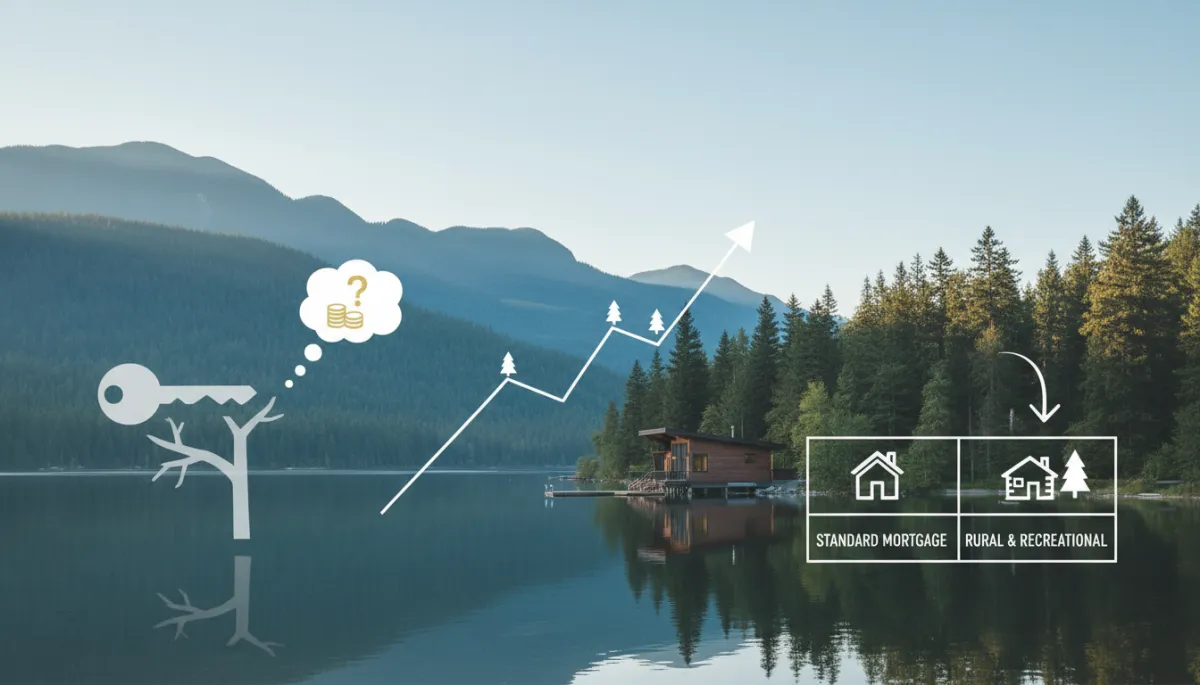
Financing Rural Properties in BC: Key Differences
Mortgages, Rural Property Financing, BC Real Estate
Financing Rural and Recreational Properties in BC: What’s Different?
Buying an acreage, farmette, or lakefront cabin in British Columbia feels very different from purchasing a city condo and so does the financing. Here’s how rural and recreational mortgages in BC work, how they compare with standard residential mortgages, and what to know before you apply.
How a Rural Property Mortgage in BC Differs from a Standard Home Loan
A standard residential mortgage in BC typically covers a home or condo in an urban or suburban area with municipal water, sewer, and year‑round access. Lenders see these as easier to appraise and resell, so guidelines and pricing are more straightforward and rates are highly competitive.
A rural property mortgage in BC, by contrast, may involve:
Larger lots or acreage, sometimes with mixed residential and agricultural use
Well and septic systems instead of municipal services
Seasonal or less‑maintained road access, especially in remote areas
Because these properties are harder to value and resell, lenders often treat them as higher risk. According to Canadian Mortgage Trends and Ratehub, rural mortgages can come with:
Stricter lending criteria and documentation requirements
Larger minimum down payments, especially on large acreages or hobby farms
More conservative property appraisals due to fewer local sales comparables
Current Rate Landscape for Rural Mortgages in BC (August 2026)
Public rate sites rarely publish a separate “rural” rate, but they provide a benchmark for strong borrowers with conventional properties in BC. As of August 7, 2026:
Conventional variable rates are around 3.50%–3.60% for top‑tier borrowers (FairRate Canada, BestRates).
Five‑year fixed rates are roughly 4.04%–4.12% for well‑qualified borrowers (Ratehub), with other lenders posting 4.8%–4.9% ranges (nesto).
Rural properties may not always qualify for these headline rates. Lenders sometimes price slightly higher to reflect location risk, or they may limit how much of the land they will lend against (for example, lending on the house and a set number of acres, not the entire parcel).
📌 Key Takeaway: Use published BC mortgage rates from sources like Ratehub and FairRate as a starting point, then confirm with a lender or broker who specifically finances rural properties to understand your actual pricing.
Lakefront Cabin Financing in BC: What Lenders Look For
A lakefront cabin is usually treated as a second home or vacation property, not a primary residence. Major lenders and insurers typically require:
Down payment of at least 20% for most vacation properties, and sometimes more for very remote or seasonal cabins (Ratehub cottage guide, Canadian Mortgage Trends, RBC).
Good credit, often a score of 680+ for a second home mortgage.
Full income verification through pay stubs, tax returns, or bank statements to show you can carry both your primary home and cabin payments.
A healthy debt‑to‑income ratio, often around 36% or lower, depending on the lender.
Lenders will also order a professional appraisal to confirm the market value and may look closely at:
Year‑round, road and winter access to the cabin
Potable water, septic, and electrical services
Whether you intend to rent it out (which can shift it toward an investment‑property profile)
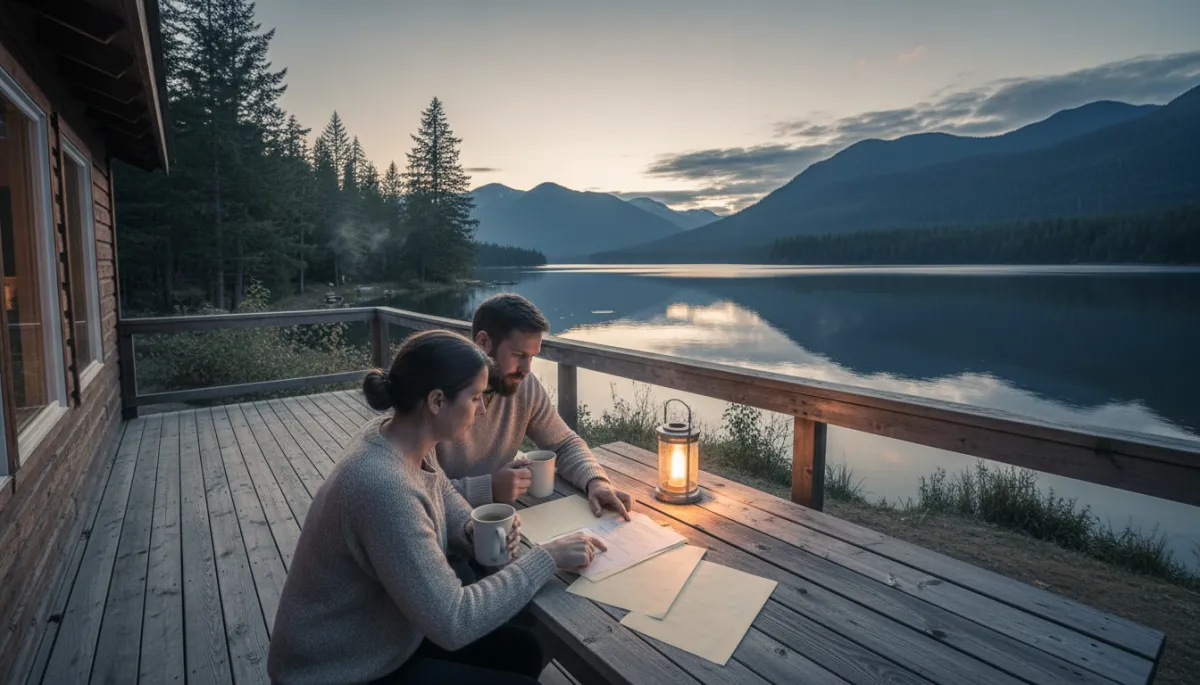
Strong income, good credit, and at least 20% down are typical for cabin financing.
When Private Financing Enters the Picture
If your rural acreage or lakefront retreat doesn’t meet a bank’s guidelines perhaps it’s very remote, largely raw land, or you have non‑traditional income you may need a private mortgage. In BC, recent data from BC Private Loans shows:
Private first mortgages on rural properties around 8.49%–9.99%, typically up to 65% loan‑to‑value.
Private second mortgages often in the 10.99%–13.99% range, depending on equity and credit.
These products are usually short‑term solutions, giving you time to improve the property or your financial profile before refinancing into a conventional mortgage at lower rates.
⚠️ Warning: Private loans carry much higher interest costs and often lender or broker fees. Always review the full cost of borrowing and have a clear exit strategy.
Rural vs. Standard Residential Mortgage: Key Comparisons
Feature Standard Residential (Urban/Suburban) Rural / Recreational (Acreage, Cabin) Typical rates Most competitive published BC rates (e.g., ~3.6% variable, ~4.1% 5‑year fixed for top borrowers) Often similar, but may be slightly higher or require alternative lenders; private options 8.5%+ Down payment As low as 5%–10% with mortgage insurance (subject to price caps and rules) Commonly 20%+ for vacation, rural, or acreage; higher for very unique properties Appraisal Straightforward, many comparable sales available More complex; fewer comparables and mixed land use can limit lending value Property services Municipal water, sewer, paved roads expected Wells, septic, and seasonal access may trigger extra lender scrutiny
FAQ: Financing Rural and Recreational Properties in BC
1. Are mortgage rates always higher for rural properties?
Not always but they can be. If the property is relatively standard (year‑round access, serviced, modest acreage) and you are a strong borrower, you may qualify for rates close to regular BC residential offers. More remote or unusual properties are more likely to see higher pricing or require private financing.
2. How much do I need as a down payment for a lakefront cabin?
Plan for at least 20%. RBC and other major lenders note that second homes and vacation properties generally require a minimum 20% down payment, and some lenders may ask for more if the cabin is seasonal, very remote, or primarily land value.
3. Can I use rental income from my cabin to qualify?
Sometimes. Some lenders will consider a portion of projected or documented rental income, especially for longer‑term rentals. Short‑term or nightly rentals (for example, through platforms like Airbnb) are treated more cautiously and may not be fully counted. Policies vary widely, so this is a key question for your broker or lender.
4. What if my credit score is below 680?
You may still qualify, but options narrow. Some mainstream lenders might decline a second‑home or rural application with weaker credit, pushing you toward alternative or private lenders at higher rates. Improving your credit before applying can significantly reduce borrowing costs.
5. How do I verify current rates and requirements before I buy?
Use reputable rate aggregators such as Ratehub, FairRate Canada, and BestRates to see current BC benchmarks, then speak directly with:
A bank or credit union that publishes rural or second‑home guidelines (for example, RBC’s rural and second‑home mortgage pages), and
A mortgage broker experienced in BC rural and recreational properties.
They can confirm today’s rates, down‑payment rules, and any location‑specific conditions before you write an offer.
6. Is this article a substitute for lender advice?
No. This guide is for general information only. Mortgage products, rates, and qualification rules change frequently. Always verify current rates and requirements directly with a bank, credit union, or licensed mortgage broker before making any financing decisions. Use sources such as RBC Royal Bank’s mortgage pages, Ratehub, FairRate, and your chosen lender’s official site as primary references.