
Blog
By Amanda Oldfield
Guide to Buying Lakefront Property in BC
Real Estate, Lakefront Property, British Columbia
Buying a Lakefront Property: The Process From Offer to Closing
Dreaming of mornings on the dock and evenings watching the sunset over the water? In British Columbia, buying a lakefront property is exciting but the steps from offer to closing are detailed and time‑sensitive. This guide walks you through the waterfront buying process in BC, using a clear, numbered timeline so you know what to expect at every stage.
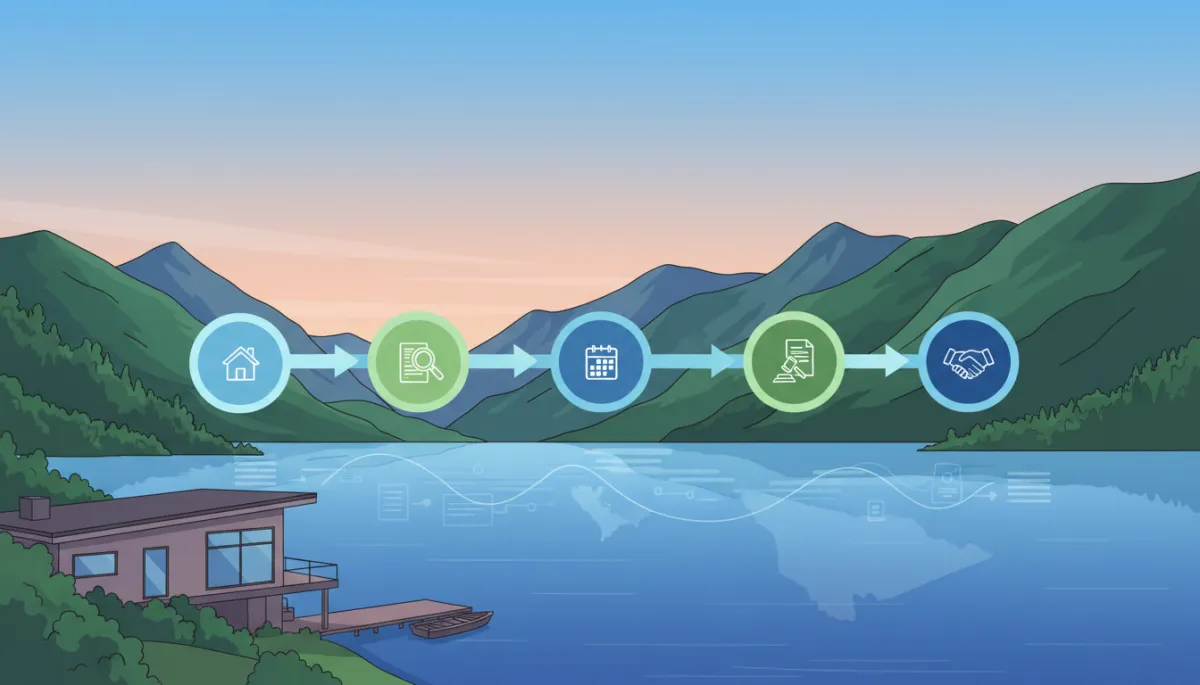
Your BC Lakefront Closing Timeline at a Glance
From the moment your offer is accepted to the day you get the keys, most lakefront purchases in BC take roughly 4 to 12 weeks, depending on how quickly conditions are removed and how complex the property is. Overall, the full journey from deciding to buy to moving in often spans 12 to 16 weeks in British Columbia real estate markets, including the viewing and offer phase (zealty.ca).
Offer accepted → subject period (about 1–2 weeks)
Subjects removed → firm deal → conveyancing and financing (about 3–8 weeks)
Completion day → funds and title transfer (usually within 30–90 days of offer)
Possession day → you receive keys (typically 1 business day after completion)
1. What Happens Right After Your Offer Is Accepted?
Once the seller accepts your offer on a lakefront property, the clock starts on your subject (condition) period. In BC, this is commonly about 7–14 days, though it’s fully negotiable. During this time, you and your real estate agent work through due diligence specific to waterfront or lakefront homes, while your lawyer or notary prepares for closing.
Confirm financing approval with your lender for this specific property.
Schedule a professional home inspection with waterfront experience.
Order an appraisal if required by your lender (often mandatory).
Engage a BC real estate lawyer or notary for title and legal review.
📌 Key Takeaway: For lakefront properties, use professionals familiar with shoreline regulations, docks, septic systems, and potential flood or erosion risks.
2. Which Documents Are Checked During the Subject Period?
During this phase, your team focuses on verifying the property’s condition, value, and legal status. In BC, your lawyer or notary will obtain and review key documents through the Land Title and Survey Authority (LTSA) and other sources (bcfsa.ca).
Title search: Confirms the registered owner, checks for mortgages, liens, easements, covenants, and any waterfront-related restrictions such as riparian rights or public access easements.
Property disclosure and reports: Seller’s Property Disclosure Statement, any surveys, septic reports, well logs, or environmental assessments, which are especially important on lakes.
Home inspection report: A detailed inspection that looks at structure, moisture issues, shoreline structures (docks, retaining walls), and systems that can be affected by proximity to water.
Appraisal report: Prepared for your lender to confirm the property’s market value, considering its waterfront location, frontage, and access.

Careful review of title, inspection, and appraisal documents protects your lakefront investment.
3. When Do You Remove Subjects and Make the Deal “Firm”?
If your inspection, appraisal, financing, and title review all meet your expectations, you’ll sign a subject removal document before the deadline. At this point, the contract becomes firm and binding. In BC, subject removal typically happens within 1–2 weeks of offer acceptance, although some competitive markets see subject‑free offers, which significantly increase risk (zealty.ca).
⚠️ Warning: Removing subjects without a satisfactory inspection or confirmed financing can leave you committed to buying a property with costly issues or without the mortgage you need.
4. What Happens Between a Firm Deal and Completion Day?
After subjects are removed, your file moves into the conveyancing and financing finalization stage. In BC, this phase generally lasts 3–8 weeks, with 4–6 weeks being most common, especially when lenders and lawyers are coordinating on a more complex waterfront purchase (zealty.ca).
Your lawyer or notary prepares transfer documents and conducts final title checks to ensure no new charges have appeared on the property (bcfsa.ca).
They calculate the Property Transfer Tax (PTT) and prepare the PTT return, along with a Statement of Adjustments for items like property taxes, utilities, and in some cases shared road or dock maintenance fees.
Your lender finalizes all mortgage instructions, including registration of your new mortgage and discharge of the seller’s mortgage, if applicable.
During this period, you’ll also provide required personal documentation such as government‑issued ID, your Social Insurance Number, and any tax or residency information needed for PTT filings and lender compliance (gov.bc.ca).
5. What Exactly Happens on Completion Day in BC?
The Completion Date, set in your Contract of Purchase and Sale, is when the legal and financial transfer occurs. In many BC transactions, completion falls roughly 30–90 days after the offer is accepted, depending on what you negotiated and how quickly conveyancing can be completed (lawyerinfo.ca).
A day or two before completion, you attend a signing appointment with your lawyer or notary to sign transfer documents, mortgage paperwork, and PTT forms, and to provide your remaining funds (limelaw.ca).
On the morning of completion, your lender wires mortgage funds to your lawyer, who then pays the seller’s lawyer and submits documents to the Land Title Office to register you as the new owner.
For lakefront homes, this is also when any agreements about docks, buoys, or shared access roads should be fully documented and in place. Your legal representative will ensure those interests are properly reflected on title where applicable.
6. When Do You Get the Keys to Your Lakefront Home?
In BC, Possession Day is usually scheduled for one business day after completion. Once your agent receives confirmation that the title has transferred and funds are released, they’ll arrange to pick up the keys and meet you at the property (limelaw.ca).
Your realtor confirms the property is vacant (unless otherwise agreed) and in substantially the same condition as when you wrote the offer.
You can now walk the shoreline, inspect the dock, and start planning furniture placement, boat storage, and any upgrades or maintenance.
7. Which Closing Documents Should You Keep on File?
After closing, your lawyer or notary will send a reporting package that’s especially important for long‑term lakefront ownership. Keep both digital and printed copies of:
Registered title showing you as owner and any registered easements, covenants, or rights of way.
Final Statement of Adjustments and trust ledger, detailing the financial breakdown of your purchase.
Inspection and appraisal reports, plus any septic, well, or shoreline assessments, which are useful for future renovations, refinancing, or resale.
💡 Pro Tip: Create a dedicated “Lake House” folder for all legal, environmental, and maintenance records. Waterfront buyers and lenders value well‑documented properties.
8. Where Can You Learn More About Buying Property in BC?
If you’re planning a BC purchase, it helps to understand both general home‑buying steps and the unique features of waterfront ownership. For a broader overview of the provincial process, you may find these guides useful:
How to Buy a Lakefront Property in BC – A consumer‑focused guide from the BC Real Estate Association on financing, regulations, and lakefront considerations.
Buying Waterfront Property in BC: A Guide – An overview of legal, environmental, and practical issues specific to waterfront homes.
How Long Does It Take to Buy a House in BC? – A detailed look at timelines from first viewing to possession.
Final Thoughts: Turning Your BC Lakefront Dream into Reality
Buying a lakefront property in British Columbia involves the same core steps as any home purchase offer, subjects, completion, possession but with extra attention on title details, inspections, appraisals, and environmental factors tied to life on the water. By understanding the typical BC timelines and required documents, and by working with experienced local professionals, you can move from accepted offer to dockside coffee with confidence and clarity.